

Published: July 25, 2026
By: TAD Editorial Team
⸻
WASHINGTON, D.C. —
President Donald Trump has signed a new executive order directing the U.S. National Park Service to install temporary warning signs outside the Smithsonian National Museum of American History, marking the latest escalation in the administration’s campaign over how American history is presented to the public.
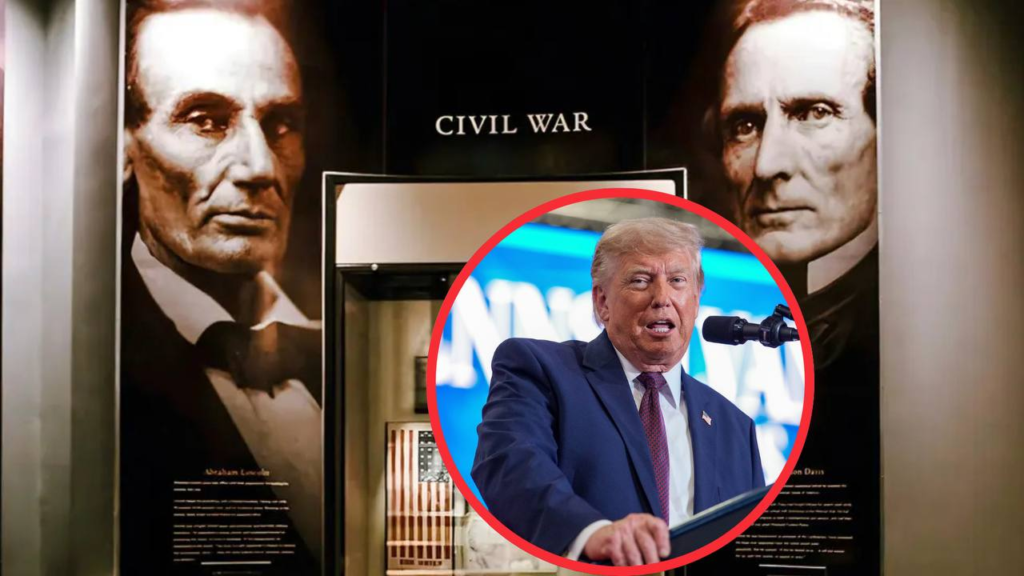
Rather than changing exhibits inside the museum, the order focuses on public spaces surrounding the institution, where federally managed sidewalks and walkways fall under the National Park Service’s authority.
According to the White House, the signs will notify visitors that the administration believes portions of the museum’s exhibitions contain “inaccurate information” and encourage them to seek alternative historical resources that align with what officials describe as a more traditional interpretation of American history.
The move has immediately drawn attention from historians, museum leaders and lawmakers, reigniting debate over politics, public institutions and historical interpretation in the United States.
⸻
Executive Order Targets Public Areas, Not Museum Exhibits
The Smithsonian Institution operates independently from the executive branch and maintains authority over its exhibitions and collections.
Because the White House cannot directly alter exhibit content, the executive order instead instructs the National Park Service to place informational signage outside the museum on nearby federal property.
Administration officials argue the approach informs visitors of what they consider disputed historical narratives without interfering directly in museum operations.
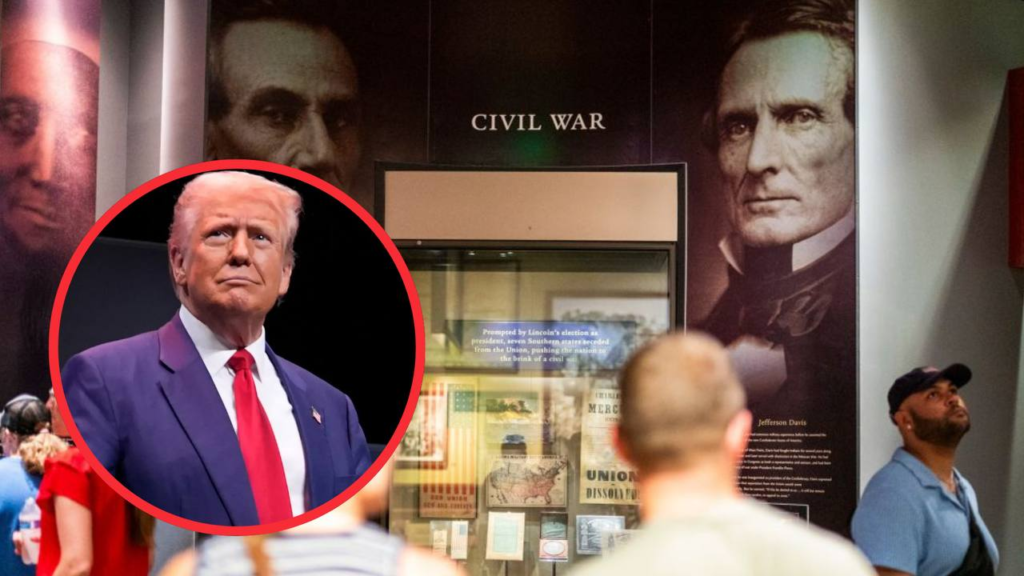
The signs are expected to remain temporary while broader discussions continue regarding federal cultural institutions.
⸻
White House Report Behind the Decision
The executive order follows the release of a 162-page report by the White House Domestic Policy Council titled “Saving America’s Story.”
The report accuses the Smithsonian Institution of promoting political activism and presenting what it describes as an anti-American perspective through certain exhibitions.
According to the administration, some displays emphasize America’s historical failures while giving insufficient attention to the nation’s achievements and democratic development.
Officials argue that federally supported museums should present history in a way that strengthens civic understanding rather than deepening political division.
⸻
Smithsonian Defends Its Scholarship
Museum leadership has firmly rejected the White House’s criticism.
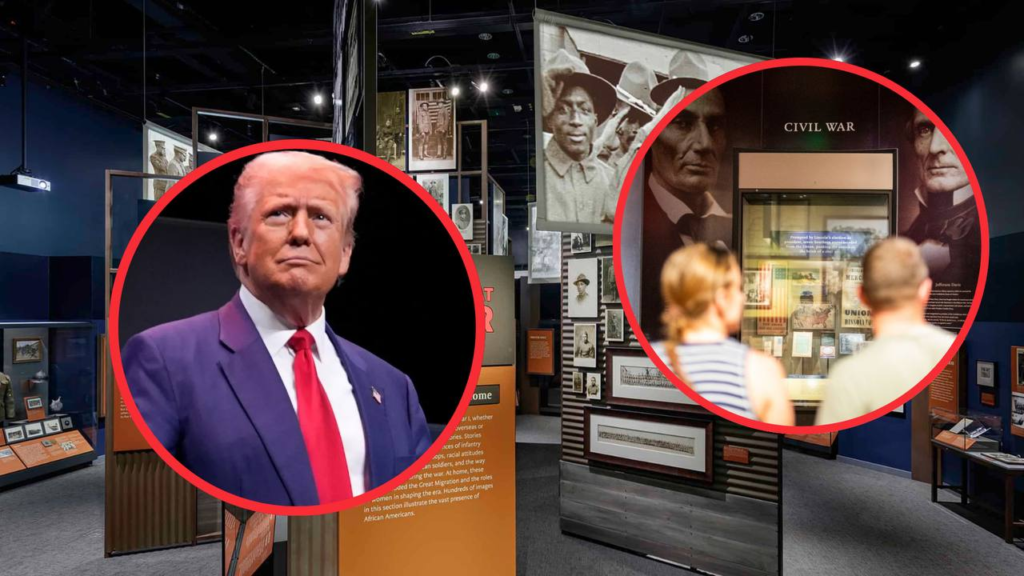
Smithsonian Secretary Lonnie Bunch defended the institution’s historians, researchers and curators, saying their work is grounded in professional scholarship, historical evidence and nonpartisan academic standards.
National Museum of American History Director Anthea M. Hartig also disputed the administration’s conclusions during congressional discussions.
She said the museum’s mission is to present American history in its full complexity—including both accomplishments and difficult chapters—allowing visitors to better understand the nation’s development over time.
Museum officials maintain that historical interpretation should remain independent of political influence regardless of which administration is in power.
⸻
Debate Over History and Politics
The executive order reflects a broader political debate that has intensified in recent years over how American history should be taught and displayed.
Supporters of the administration argue that public institutions have increasingly highlighted negative aspects of U.S. history while overlooking the country’s constitutional achievements, innovation and democratic values.
Critics, however, contend that acknowledging difficult historical events—including slavery, segregation, civil rights struggles and discrimination—is essential to providing a complete and accurate understanding of the nation’s past.
Historians note that museums frequently revise exhibitions as new research emerges, making public debate over historical interpretation a continuing part of academic scholarship.
⸻
Legal and Administrative Questions Remain
Although the National Park Service manages the sidewalks surrounding the museum, legal experts say questions remain about how the executive order will be implemented and whether it could face legal or administrative challenges.
Because the Smithsonian operates as an independent institution established by Congress, any attempt to directly influence exhibit content could involve complex constitutional and governance issues.
For now, the administration’s directive applies only to signage outside the museum rather than its exhibits.
⸻
Why It Matters
The dispute highlights growing political divisions over education, historical interpretation and the role of federally funded cultural institutions. While the executive order does not alter museum exhibits themselves, it raises broader questions about government influence over public history and the independence of national museums.
⸻
TAD Perspective
History often becomes a focal point of political debate because interpretations evolve alongside new evidence and changing social perspectives. Museums face the challenge of presenting complex historical narratives while maintaining scholarly independence. As discussions continue, balancing academic integrity, public accountability and political expectations will likely remain a significant issue for cultural institutions across the United States.
Sources
CNN
CNN Politics (X)
KTVZ / CNN
Readers.id
White House Domestic Policy Council Report: Saving America’s Story

