
Published: July 29, 2026
By: TAD Editorial Team
—
MENLO PARK, California —
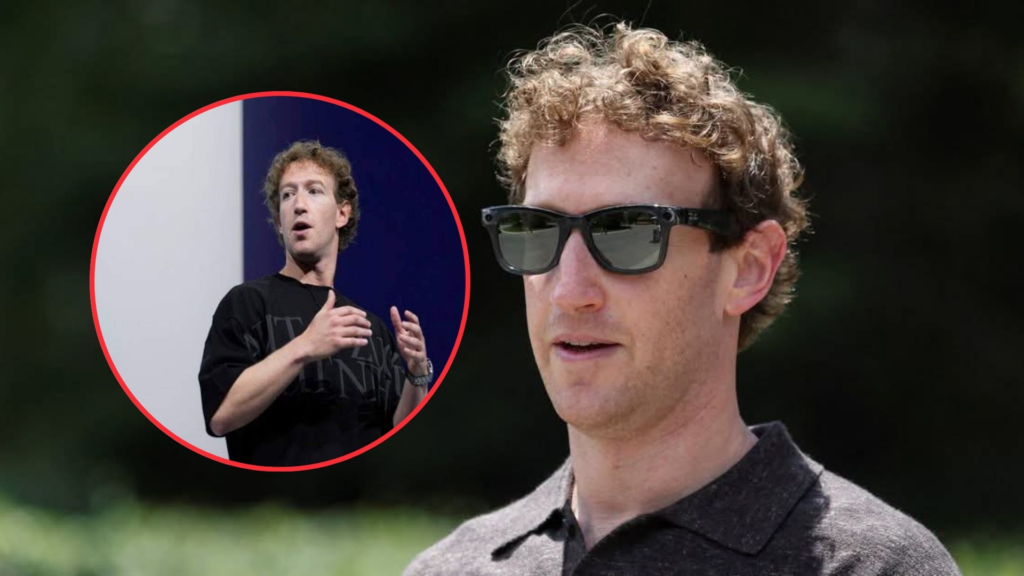
As competition between the United States and China over artificial intelligence continues to escalate, Meta CEO Mark Zuckerberg has argued that restricting access to advanced Chinese AI models would not be the most effective strategy for maintaining America’s technological leadership.
Speaking in an interview with the *Financial Times*, Zuckerberg said the United States should prioritize strengthening its own innovation ecosystem instead of attempting to slow China’s progress through broad restrictions.
His comments come as Washington expands trade controls and warns that Chinese technology companies could face additional sanctions over concerns related to intellectual property and national security.
—
Competition, Not Isolation
Rather than blocking foreign AI systems, Zuckerberg believes U.S. developers should focus on improving their own capabilities.
According to him, American companies need to identify technical weaknesses, remove barriers to innovation and accelerate research if they hope to remain ahead in the rapidly evolving AI sector.
He suggested that long-term competitiveness depends more on building stronger products than on limiting access to overseas technologies.
The remarks represent one of Zuckerberg’s clearest public positions on how the United States should approach China’s fast-growing artificial intelligence industry.
—
Chinese AI Advances Draw Attention

The debate has intensified following the release of Moonshot AI’s Kimi K3, a large language model that has attracted attention for its programming and reasoning capabilities.
Its performance has fueled discussions among U.S. policymakers and technology experts over whether Chinese developers are rapidly closing the gap with American AI leaders.
Some officials have questioned whether Chinese companies are benefiting from unauthorized access to U.S. technology, while others believe domestic research investment has significantly accelerated China’s progress.
The emergence of increasingly competitive Chinese AI models has added urgency to Washington’s broader technology strategy.
—
Washington Expands Trade Restrictions
On the same day as Zuckerberg’s interview was published, the Trump administration announced new restrictions targeting imports of certain Chinese-made robots and power inverters.
Officials said the measures are intended to strengthen U.S. national security, reduce dependence on foreign supply chains and support domestic industries expected to play a critical role in future AI infrastructure.
Separately, Treasury Secretary Scott Bessent warned that Chinese firms accused of technology theft could face financial sanctions or be added to the Commerce Department’s Entity List, limiting their access to American technology and business partnerships.
The latest actions reflect the administration’s broader effort to reshape strategic industries viewed as essential to the future AI economy.
—
Different Views on Protecting U.S. Leadership

The discussion highlights two competing approaches emerging within the United States.
One view argues that tighter export controls and trade restrictions are necessary to prevent sensitive technology from strengthening geopolitical rivals.
Another, reflected in Zuckerberg’s comments, suggests that sustainable leadership comes from faster innovation, stronger research and greater private-sector investment rather than broad technology bans.
While both sides agree that AI leadership carries major economic and national security implications, they differ on how best to achieve that objective.
—
AI Becomes a Strategic Battleground
Artificial intelligence has increasingly become one of the defining areas of strategic competition between Washington and Beijing.
Governments are investing heavily in semiconductor production, cloud infrastructure, advanced computing and AI talent while introducing policies designed to secure technological advantages.
As AI capabilities continue advancing rapidly, decisions made by policymakers and industry leaders could shape the global technology landscape for years to come.
—
Why It Matters
The debate surrounding Chinese AI reflects a broader question facing governments worldwide: whether technological leadership is better protected through restrictions or through greater domestic innovation. The outcome could influence global AI development, international trade and future technology regulation.
—
TAD Perspective
Rather than focusing solely on limiting competitors, many technology leaders argue that maintaining innovation requires continued investment in research, talent and infrastructure. As AI competition accelerates, balancing national security concerns with open technological development is likely to remain one of the industry’s biggest policy challenges.
Sources
* Reuters
* Financial Times
* ET Enterprise AI
* Wall Street Journal (Referenced by Meta)
* Official Meta Statements

