

Summary
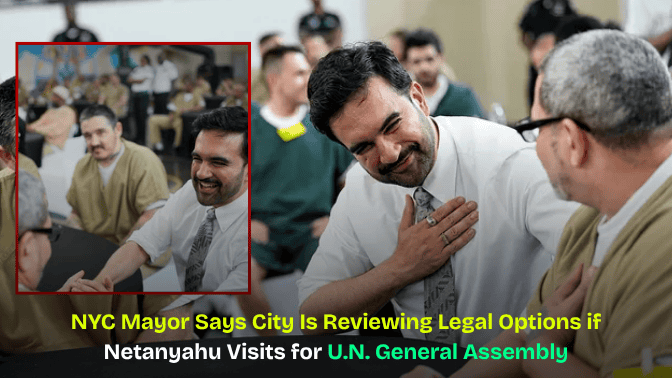
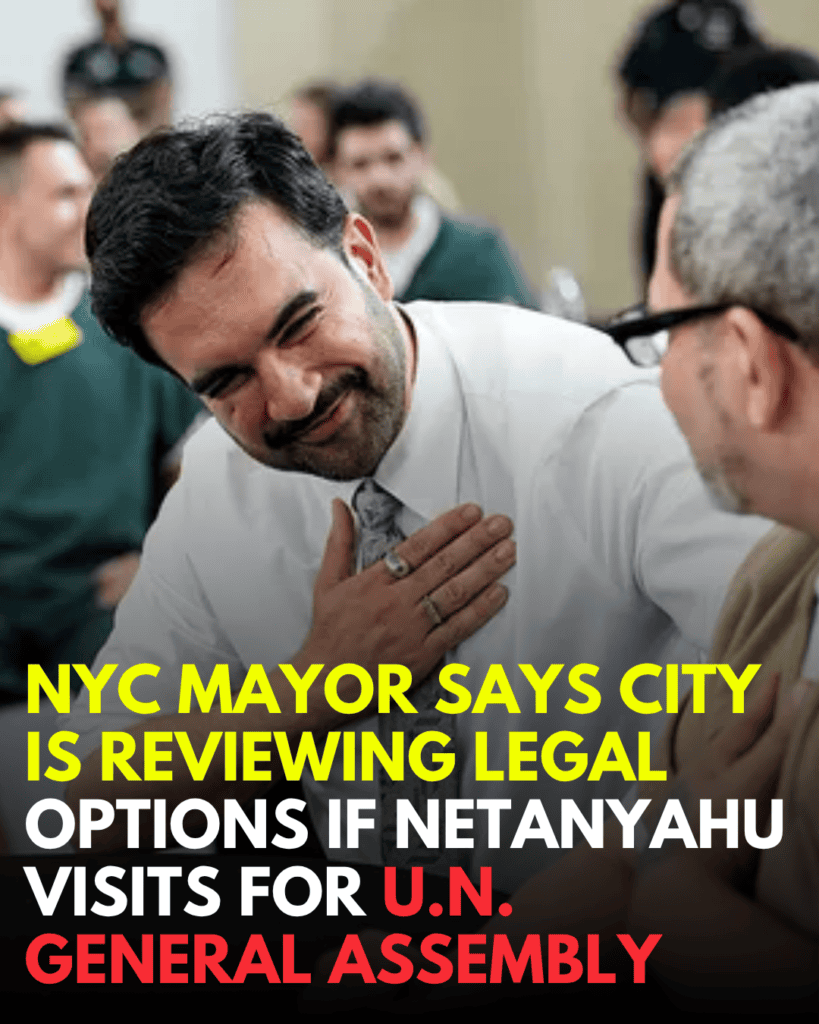
New York City Mayor Zohran Mamdani says his administration is reviewing whether the city has any legal authority to take action if Israeli Prime Minister Benjamin Netanyahu visits New York for the upcoming United Nations General Assembly (UNGA).
According to Mamdani, the city’s Law Department has been asked to examine what legal powers, if any, New York City could exercise should Netanyahu travel to the annual U.N. gathering. During his remarks, Mamdani referred to Netanyahu as a “war criminal” and argued that he should face proceedings before the International Criminal Court (ICC).
City Hall has not publicly released any legal opinion supporting such a course of action, and the mayor’s office has not responded to questions about whether the New York Police Department would be directed to act if legal advisers concluded the city had authority to do so.
The remarks were met with criticism from U.S. Ambassador to the United Nations Mike Waltz, who said New York City does not have the legal authority to arrest a visiting foreign leader. Waltz argued that matters involving foreign governments, diplomatic protections, and treaty obligations fall under the authority of the U.S. federal government rather than municipal officials.
The discussion comes after the International Criminal Court issued arrest warrants in November 2024 for Israeli Prime Minister Benjamin Netanyahu and former Defense Minister Yoav Gallant over alleged war crimes and crimes against humanity linked to Israel’s military campaign in Gaza.
Israel has rejected the allegations and disputes the ICC’s jurisdiction. The allegations have not been adjudicated through a final judgment, and Israeli officials maintain that the court lacks legal authority over the case. The United States is not a party to the Rome Statute, the treaty establishing the ICC, and has historically challenged the court’s jurisdiction in cases involving U.S. nationals and certain allies.
The issue has attracted international attention because the United Nations General Assembly brings world leaders to New York each year. The ICC warrants have also prompted debate in several countries over how authorities would respond if Netanyahu were to enter their territory.
Mamdani’s comments have also renewed scrutiny of his involvement in international issues. Earlier this year, the U.S. State Department intervened to halt a planned meeting between a senior New York City official and Iran’s ambassador to the United Nations, emphasizing that responsibility for U.S. foreign policy rests with the federal government.
Background
The International Criminal Court investigates allegations involving genocide, crimes against humanity, war crimes, and the crime of aggression. While the court can issue arrest warrants, enforcement depends on the legal obligations and domestic laws of individual countries.
Because the United States is not a party to the Rome Statute, the legal effect of ICC arrest warrants within the country remains a complex issue involving domestic law, international agreements, diplomatic immunity, and federal authority.
Analysis
Mamdani’s remarks have intensified debate over the role of local governments in matters involving international law and foreign policy. While the ICC warrants have generated legal and diplomatic discussions in several countries, decisions concerning the treatment of foreign leaders, diplomatic immunity, extradition, and relations with foreign governments are generally handled by national governments rather than municipal authorities under the U.S. constitutional framework.
If Netanyahu were to visit New York, any legal action would likely depend on decisions made by federal authorities and applicable U.S. law, rather than the authority of New York City acting independently.
Source: Fox News reporting; background information based on publicly available International Criminal Court (ICC) documents.

