

Published: July 19, 2026
Written by: TAD Editorial Team
Summary
The United States has launched a new wave of military strikes against targets it says are linked to Iran following the deaths of two American service members in Jordan. The latest exchange marks another sharp escalation in the months-long conflict, raising concerns that fighting could spread further across the Middle East.
What Happened?
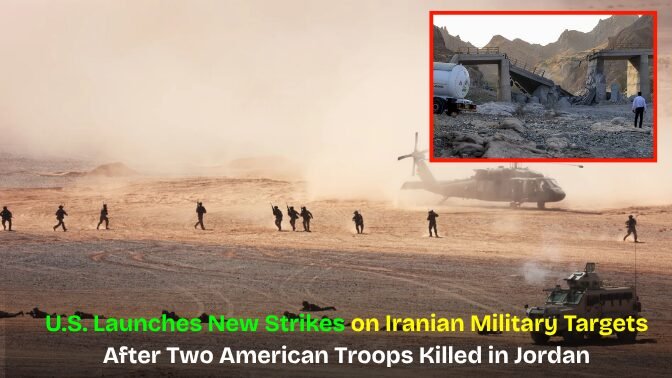
The U.S. military announced fresh strikes against Iranian military-related targets after two American service members were killed and another was reported missing following an attack in Jordan, according to U.S. Central Command.
Washington said the operation was intended to degrade military capabilities that it believes were responsible for attacks on U.S. personnel stationed in the region. U.S. officials described the strikes as a response aimed at deterring further attacks rather than signaling a broader change in military objectives.
Iran has condemned the strikes and has accused the United States of expanding the conflict. Iranian officials have also warned that additional military action could trigger further retaliation across the region.
Background
Tensions between Washington and Tehran have continued to rise since fighting intensified earlier this year.
The deaths of the two U.S. service members represent one of the most serious recent incidents involving American forces in the conflict and have increased pressure on the U.S. administration to respond.
Military activity has expanded beyond Iran itself, with attacks and interceptions reported in several neighboring countries, including Jordan, Kuwait and Bahrain, highlighting the regional nature of the crisis.
Regional Impact
Several countries across the Middle East have strengthened air defense measures amid fears that additional missiles or drones could cross their airspace.
Regional governments continue to monitor developments closely as commercial shipping routes and critical energy infrastructure remain vulnerable. Analysts have warned that prolonged fighting could disrupt trade and increase uncertainty throughout the Gulf.
International Response
International leaders have urged restraint and called on both sides to avoid actions that could trigger a wider regional conflict.
Diplomatic efforts remain limited as military operations continue, while governments are monitoring the security situation for their citizens and diplomatic missions in the region.
Why It Matters
The latest strikes represent another significant escalation in one of the world’s most closely watched security crises.
A prolonged confrontation between the United States and Iran could affect regional stability, international energy markets and global shipping routes, particularly around the Strait of Hormuz.
What’s Next?
Officials are expected to continue assessing the impact of the latest strikes while monitoring the possibility of further retaliation.
Military analysts say the coming days will be critical in determining whether the confrontation remains limited or develops into a broader regional conflict.
TAD Analysis
The latest exchange underscores how quickly localized attacks on military personnel can trigger wider strategic responses. While Washington describes its actions as defensive and targeted, Tehran has indicated that it views the strikes as further escalation. With both sides maintaining military pressure, the risk of miscalculation remains elevated, making diplomatic communication increasingly important even as military operations continue.
Editor’s Note
This report is based on information released by U.S. officials and reporting from multiple international news organizations available at the time of publication. As this is a developing story, additional verified information may lead to updates.
Sources
- Reuters
- France 24
- The Wall Street Journal
- Axios
- U.S. Central Command (CENTCOM)

