
Published: July 20, 2026
By TAD Editorial Team
South Korea’s stock market is undergoing one of its most dramatic transformations in decades, evolving from a traditional barometer of global trade into one of the world’s most AI-driven equity markets.
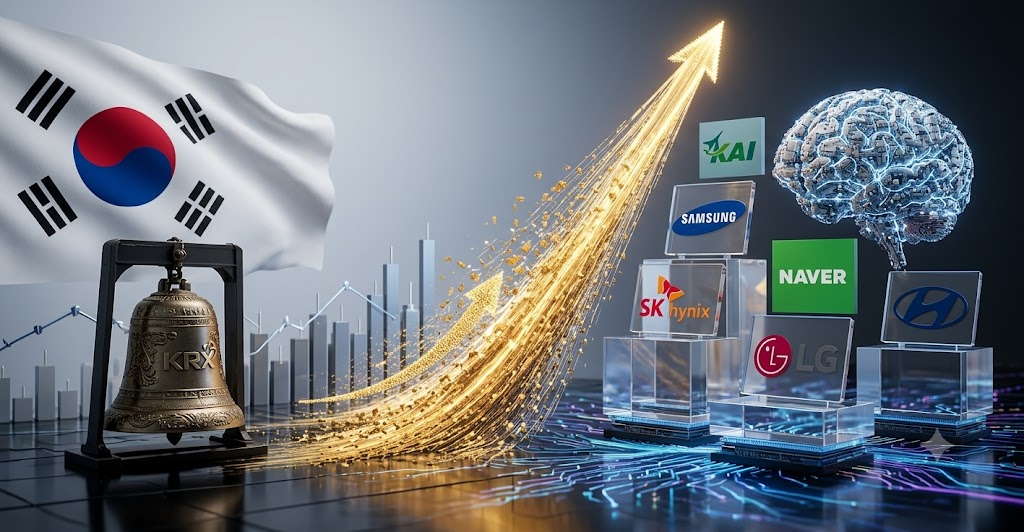
Once closely tied to the health of the global economy through exports of automobiles, electronics and industrial goods, the country’s benchmark KOSPI index is now increasingly being shaped by investor enthusiasm surrounding artificial intelligence—particularly the soaring demand for advanced memory chips.
At the center of the rally are semiconductor giants Samsung Electronics and SK Hynix, whose dominance in high-bandwidth memory (HBM) chips has placed South Korea at the heart of the global AI supply chain. As technology companies race to expand AI infrastructure, investors have poured billions of dollars into Korean chipmakers, fueling sharp gains across the market.
AI Optimism Reshapes the Market
The AI boom has attracted an unprecedented wave of retail participation, particularly through leveraged exchange-traded funds (ETFs) linked to semiconductor stocks.
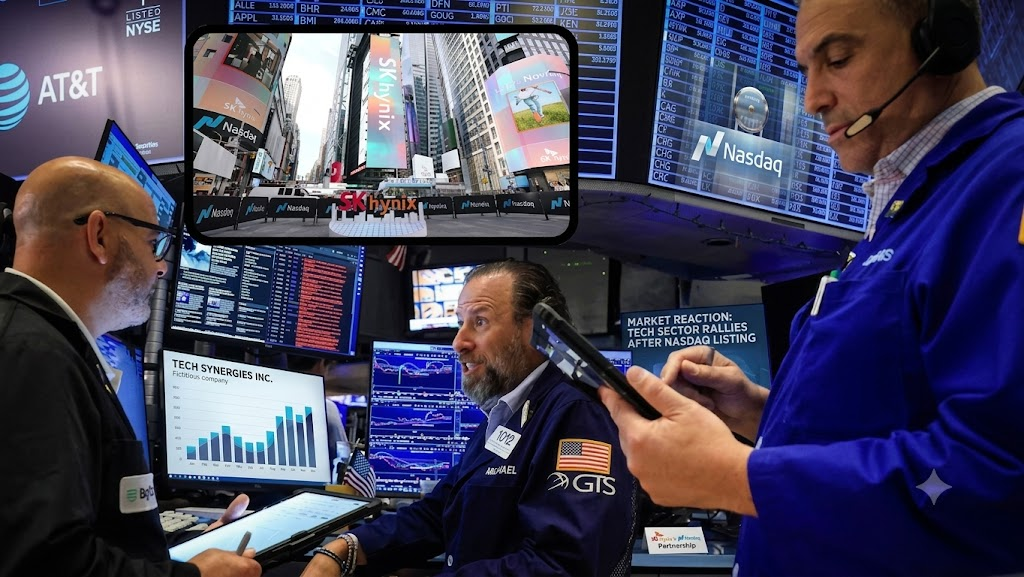
Trading activity has become so concentrated that leveraged ETFs tracking SK Hynix have grown into some of the largest products of their kind globally. Daily turnover in these funds has, at times, exceeded trading volumes in the underlying shares themselves, highlighting the speculative nature of the current rally.
Analysts say the market’s behavior increasingly reflects momentum-driven trading rather than traditional economic fundamentals. Heavy borrowing through margin accounts has amplified price swings, raising concerns that volatility could intensify if investor sentiment shifts.
Regulators Step In
The rapid expansion of leveraged trading has prompted South Korean regulators to tighten oversight.
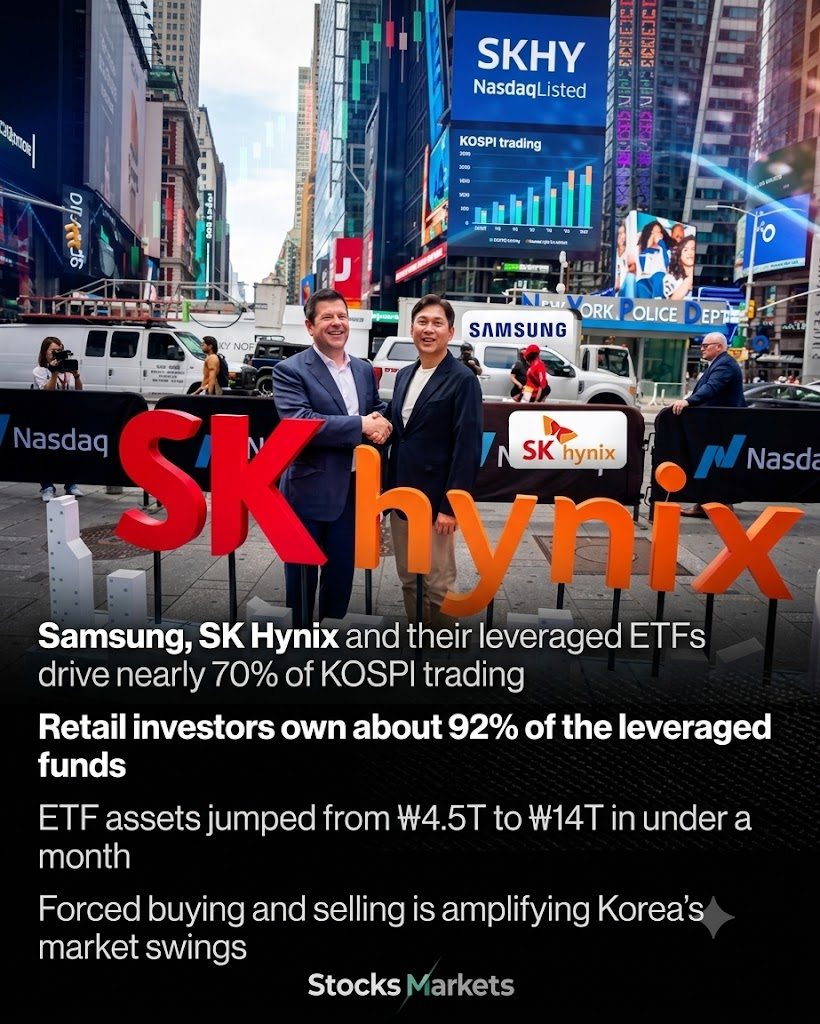
Authorities have introduced measures aimed at slowing the launch of new leveraged ETFs while increasing capital requirements for certain products, arguing that excessive speculation could threaten broader market stability.
Although policymakers acknowledge that AI has created significant opportunities for Korea’s technology sector, they have also warned that concentrated investment and rising leverage could expose the financial system to greater risks during periods of market stress.
Foreign Investors Become More Selective
Despite the AI-driven rally, overseas investors have become increasingly cautious.
Many global fund managers have reduced exposure to South Korean equities after strong gains pushed valuations higher and increased concentration risk. Rather than abandoning the market entirely, institutional investors appear to be rebalancing portfolios while seeking opportunities in other Asian markets offering lower valuations.
That trend reflects growing concern that enthusiasm surrounding AI may have moved faster than underlying corporate earnings, even as long-term demand for advanced semiconductors remains strong.
Can the Momentum Continue?
Market participants remain divided over whether the AI rally has further room to run.
Optimists point to persistent shortages of advanced memory chips, long-term supply agreements with global technology companies and continued investment in AI infrastructure as reasons for sustained growth.
More cautious investors argue that rapid gains, widespread leverage and increasingly speculative trading patterns leave the market vulnerable to sharp corrections should earnings disappoint or global technology sentiment weaken.
Why It Matters
South Korea’s transformation reflects a broader shift taking place across global financial markets. As artificial intelligence becomes one of the defining investment themes of the decade, equity markets are increasingly being driven by expectations surrounding AI infrastructure rather than traditional economic indicators.
For investors, the Korean market has become both a beneficiary of the AI revolution and a test case for how quickly optimism can reshape market dynamics.
TAD Perspective
South Korea’s AI-driven rally highlights both the opportunities and risks of concentrated investment themes. The country’s leadership in advanced semiconductor technology provides a strong long-term foundation, but the growing influence of leveraged products and speculative trading means market volatility is likely to remain elevated. Whether the current momentum proves sustainable will depend not only on AI demand but also on the ability of corporate earnings to justify increasingly ambitious valuations.
Sources
- Reuters
- TradingView (Reuters syndicated report)
- MarketScreener
- Reuters Markets Analysis

