

Published: July 20, 2026
By TAD Editorial Team
The U.S. dollar has started the week holding firm against the Japanese yen, with the USD/JPY pair hovering just below multi-decade highs as investors weigh geopolitical tensions, energy prices and expectations for global central banks.

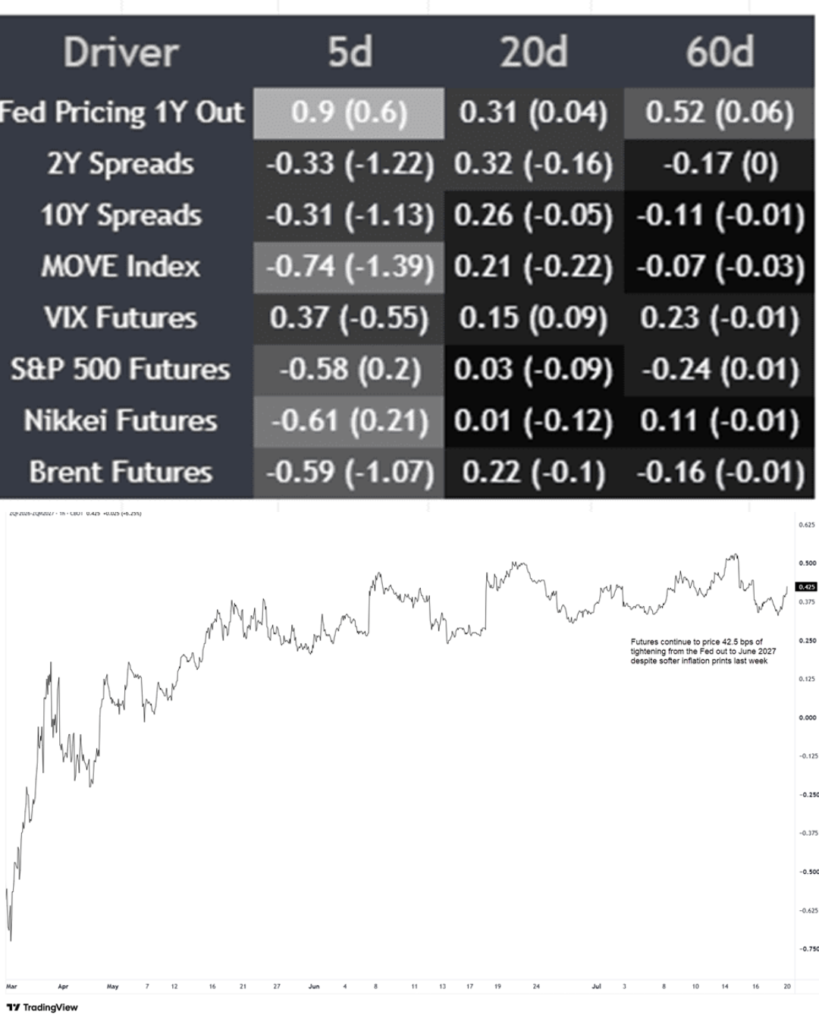
Despite softer-than-expected U.S. inflation data released recently, the yen has struggled to regain momentum. Instead, rising oil prices fueled by renewed tensions in the Middle East have helped support the dollar, reinforcing expectations that inflation risks may persist and potentially keep U.S. interest rates higher for longer.
For Japan, the situation is particularly challenging. As one of the world’s largest energy importers, higher crude oil prices increase import costs and place additional pressure on the economy. Analysts say this dynamic continues to undermine the yen even as domestic policymakers signal support for an independent monetary policy led by the Bank of Japan.
Markets Shift Their Focus Beyond Economic Data
This week’s economic calendar offers relatively few major events capable of moving currency markets. The Federal Reserve has entered its pre-policy meeting blackout period ahead of next week’s interest rate decision, while Japan’s Marine Day holiday has reduced trading activity at the beginning of the week.
Instead, investor attention is turning toward corporate earnings and global risk sentiment.
Results from major technology companies, including Alphabet, Tesla, Intel and South Korea’s SK Hynix, are expected to influence broader market confidence. A stronger-than-expected earnings season could reinforce demand for risk assets, while disappointing results may encourage investors to unwind carry trades—a development that could temporarily strengthen the yen.
Technical Signals Suggest a Breakout May Be Approaching
From a technical perspective, USD/JPY continues to trade within a narrowing range after repeatedly testing resistance near its recent highs.
Market analysts note that bullish momentum indicators, including the Relative Strength Index (RSI) and Moving Average Convergence Divergence (MACD), remain supportive of further gains. If buyers manage to clear resistance around 162.84, the pair could target the 164.00 and 165.00 levels.
Should momentum weaken, traders are watching initial support around 161.50, followed by 160.73, which previously acted as a major resistance zone before turning into technical support.
The USD/JPY exchange rate has become one of the clearest indicators of how investors are balancing inflation, interest-rate expectations and geopolitical uncertainty.

Why Everyone Is Watching USD/JPY
Unlike previous market cycles, recent trading has shown that traditional drivers such as U.S.-Japan bond yield spreads are exerting less influence than broader global developments. Energy markets, geopolitical risks and investor positioning have increasingly shaped the direction of the currency pair.
TAD Perspective
The current consolidation suggests that traders are waiting for a fresh catalyst before committing to the next major move. While technical indicators continue to favor the dollar, external risks—including developments in the Middle East, central bank guidance and corporate earnings—could quickly alter market sentiment. Until one of those catalysts emerges, USD/JPY is likely to remain one of the most closely watched currency pairs in global financial markets.
Sources
- FOREX.com – USD/JPY Weekly Outlook: Coiling Beneath Multi-Decade Highs
- Forex Factory
- TradingView / ForexLive
- Reuters

