

LAS PALMAS DE GRAN CANARIA, Spain —
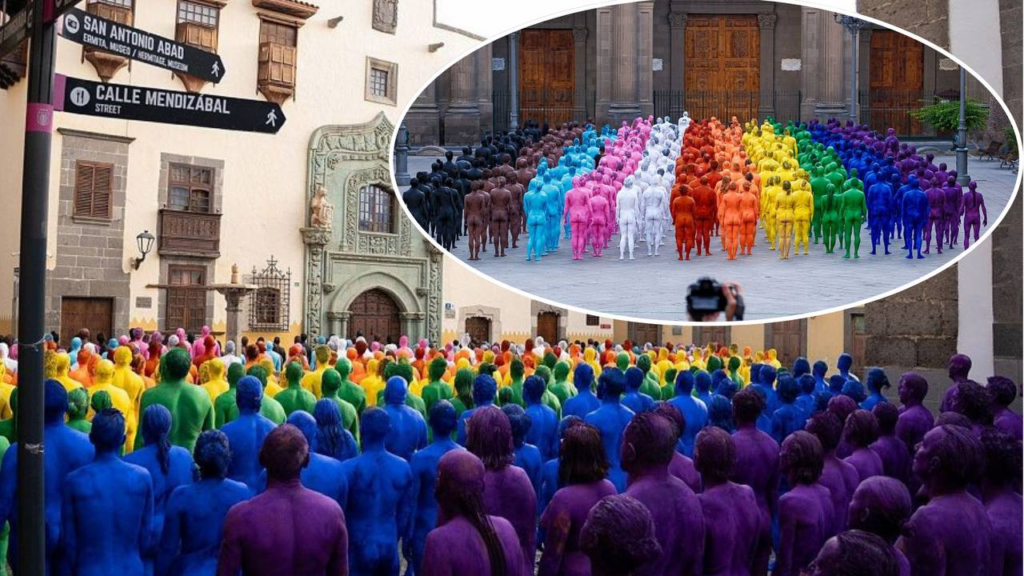
More than 500 volunteers gathered without clothing in the historic Plaza de Santa Ana before sunrise on Sunday to become part of a striking public artwork celebrating diversity, equality, and LGBTQIA+ visibility.
The installation, titled “Gran Spectrum,” was created by renowned American photographer Spencer Tunick, whose large-scale nude photography projects have transformed public spaces around the world for more than two decades.
Participants stood shoulder to shoulder after having their bodies painted in different colors, collectively forming a giant living rainbow that reflected the colors of the LGBTQIA+ Pride flag.
The project drew crowds of spectators and international media attention, turning one of Gran Canaria’s best-known public squares into a symbol of inclusion and artistic expression.
Art Meets Advocacy
Unlike traditional public monuments, Gran Spectrum relied entirely on human participation.
Volunteers, arranged according to rainbow colors, created what organizers described as a “living sculpture” designed to celebrate diversity while encouraging greater visibility for LGBTQIA+ communities.
The installation was unveiled at dawn, taking advantage of natural light to capture the vivid body-painted composition against the historic architecture surrounding Plaza de Santa Ana.
Tunick has long described the human body as a universal artistic medium capable of expressing shared identity regardless of age, gender, nationality, or background.
Hundreds Answered the Call
Around 500 people registered to participate in the project.
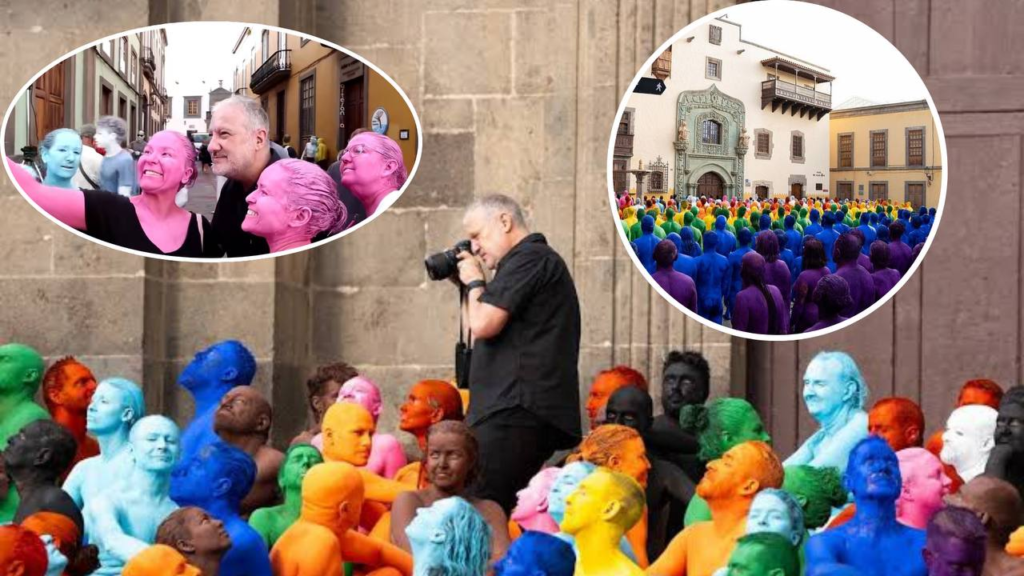
Before the photo session began, volunteers were carefully organized into different color groups where professional body-painting teams applied environmentally safe pigments representing the rainbow spectrum.
Once complete, participants took their assigned positions under the photographer’s direction while drones and elevated cameras documented the installation from above.
Despite the early morning schedule, organizers reported strong public interest, with spectators gathering nearby to witness the temporary artwork before the square returned to normal use later in the day.
Gran Canaria’s Long Relationship with Diversity
The Canary Islands, particularly Gran Canaria, have built an international reputation as one of Europe’s most LGBTQIA+-friendly destinations.
Local officials and cultural organizations have increasingly supported projects promoting equality through festivals, exhibitions, and public art initiatives.
Organizers said the installation sought not only to create a visually powerful photograph but also to reinforce messages of acceptance and social inclusion.
The rainbow design was intentionally chosen because it remains one of the world’s most recognizable symbols of LGBTQIA+ identity and solidarity.
A Career Built on Large-Scale Human Installations
Spencer Tunick is internationally recognized for photographing thousands of nude volunteers in cities across Europe, North America, South America, Asia, and Australia.
Rather than focusing on individual portraits, his work transforms groups of ordinary people into temporary public sculptures that challenge perceptions of the human body, public space, and collective identity.
Many of his previous installations have taken place at iconic landmarks, museums, beaches, and historic city centers.
Participants generally volunteer without compensation, viewing the experience as both an artistic collaboration and a social statement.
Public Reaction
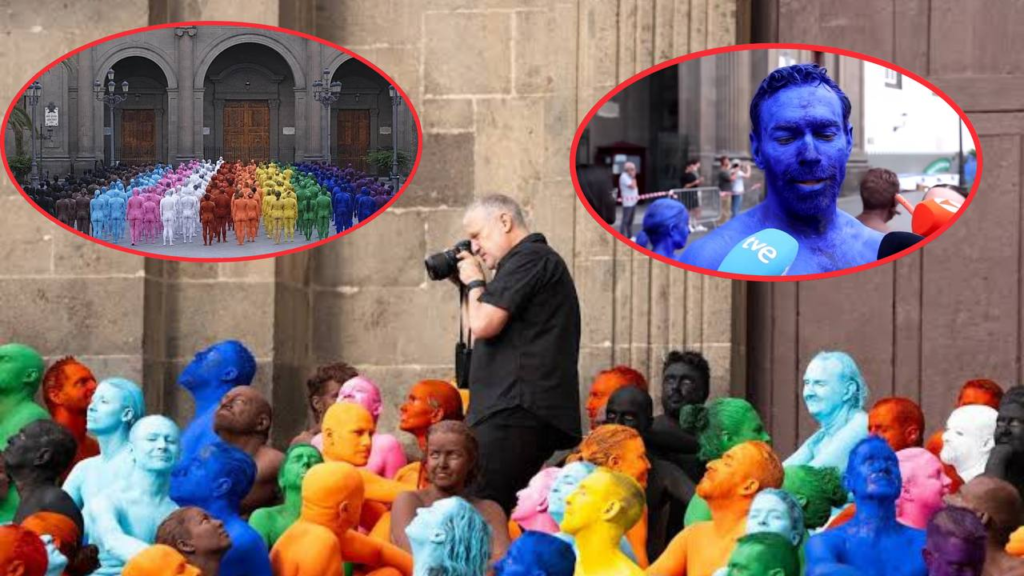
Images of Gran Spectrum quickly spread across social media following the event.
Supporters praised the installation as a creative celebration of diversity and freedom of expression, while others viewed it as another example of Tunick’s unique ability to combine contemporary art with social dialogue.
Local tourism officials also noted the international attention generated by the project, highlighting Gran Canaria’s reputation as a destination known for openness, culture, and artistic innovation.
No major security incidents were reported during the event.
Why It Matters
Gran Spectrum demonstrates how public art can extend beyond aesthetics to address broader social themes. By combining photography, performance, and community participation, the project sought to encourage conversations about inclusion, identity, and equal representation for LGBTQIA+ communities.
TAD Perspective
Public art often reflects the values and debates of its time. Whether viewed primarily as artistic expression or social activism, projects like Gran Spectrum illustrate how collaborative installations can draw global attention to issues of diversity while transforming familiar public spaces into platforms for cultural dialogue.
Sources
The Guardian
Heraldo de Aragón
Canarias7

